The trainer was extremely helpful and I feel if I had any questions or queries in the future he is someone I could contact for advice. The games he demonstrated were very good for helping us entertain the children in our setting and help their development at the same time. Thank you very much it was a great course and really helped me.”
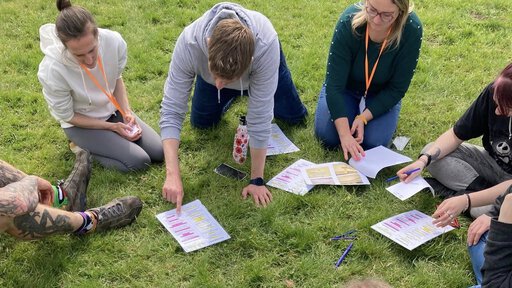
Youthwork training workshops and courses explore the core principles of effective youth work, focusing on values, ethics and the role of the practitioner in creating safe, supportive environments. It develops confidence in managing groups, building trust and fostering positive relationships, while emphasising the importance of acting as a consistent and reflective role model.
A strong focus is placed on understanding behaviour, both individual and within groups. Participants explore what drives behaviour, how to manage challenges constructively and how to support young people to set and review personal goals. Key safeguarding knowledge is embedded throughout, alongside guidance on maintaining professional boundaries and responding appropriately to concerns.
The various programmes draw on established psychological and group-work models, including the Betari Box, Glasser’s Total Behaviour and Choice Theory, and Tuckman’s stages of group development. These frameworks provide practical insight into how thoughts, feelings and behaviours are connected, how groups evolve, and how practitioners can adapt their approach to different situations.
Alongside theory, there is a strong practical element focused on communication and engagement. This includes using empathy effectively, applying descriptive praise, creating and delivering engaging activities, and embedding approaches such as PACE (Playfulness, Acceptance, Curiosity and Empathy). The overall aim is to support young people to build confidence, develop resilience and feel motivated to challenge themselves in a positive and supportive setting.
Training content can include any of the following themes:
Understanding children’s behaviour triggers
Effective communication
Praise, attention and communication
Helping children to manage frustration
Positive strategies for misbehaviour
Developing children’s confidence
Setting clear expectations
Effective Time-out
Building a predictable behaviour routine
Building a predictable behaviour routine
High-risk activity planning
Resilience Skills
The Strong Minds, Bright Futures training equips practitioners with the practical skills and knowledge to effectively nurture resilience in children and young people.
This full-day programme focuses on developing key personal, social and employability skills, building self-awareness through exploration of personality, learning styles and team roles. It strengthens core abilities such as problem solving, critical and creative thinking, teamwork, communication and emotional intelligence, using structured approaches and practical activities.
A central theme is resilience: encouraging a positive mindset, learning from setbacks and persevering through challenges. The training also introduces therapeutic communication techniques, including the PACE approach (Playfulness, Acceptance, Curiosity and Empathy), to support strong relationships and effective listening.
—
You may also wish to upskill your staff through a 3-part train-the-trainer Resilience Skills programme. This course equips practitioners to deliver a 25-hour, 10-session programme, with full access to digital resources.
The course covers key themes including:
Work Skills for the Future – self-evaluation
Developing tools for effective learning
Resilience
Planning and goal setting
Overcoming barriers
Problem solving
Collaboration and teamwork
Creative thinking
Emotional intelligence
Coaching and conflict resolution
Playwork Training
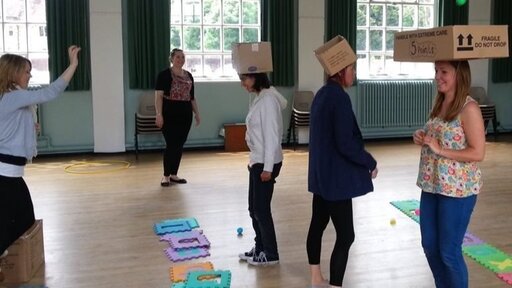
Sessions focus on building confidence, creativity and practical skills through a mix of theory and hands-on experience. Participants explore how play can be used as a powerful tool for engagement, learning and development, while developing their own ability to plan, deliver and reflect on activities that are safe, inclusive and purposeful.
Session content:
Session planning and supported activity design using resources such as Playbox Games
Identifying strengths, skills and areas for development
Learning and delivering a wide range of games and activities
Understanding the theory and value of play
Risky play, including safety considerations and appropriate risk-taking
Game design and creating new activities
Exploring different types of play, including child- and adult-led approaches
Creating inclusive play opportunities for all participants
Managing behaviour and responding to challenges within activities
Developing effective communication skills
Using praise, attention and communication to support independence
Setting clear expectations and managing behaviour positively
My coaching & mentoring training programme explores the key principles of effective coaching and mentoring, focusing on the commitment, motivation and qualities required to build strong, purposeful relationships. It examines what mentoring means in practice, the mentoring process and the importance of working within clear roles, responsibilities and professional boundaries.
Participants develop confidence in planning sessions, setting expectations and getting to know their mentees in a purposeful and structured way.
A strong emphasis is placed on communication and reflection. This includes developing effective questioning styles, using empathy, recognising and challenging assumptions, and providing constructive, supportive feedback. Participants learn how to guide others through SMART goal setting and review, helping individuals to identify progress, overcome barriers and stay focused on their development.
The training also covers the wider responsibilities of the mentoring role, including confidentiality, data protection and safeguarding. It encourages practitioners to reflect on limits, expectations and how to bring the mentoring relationship to a positive and appropriate close, while also identifying their own ongoing training and development needs.
As a result, participants gain a clear understanding of how mentoring can support individuals within their organisation. They develop the skills and confidence to guide others through challenges, support planning and decision-making, and respond effectively to a range of situations—ensuring colleagues feel supported, heard and safe.
Topics covered include:
Commitment, motivation and understanding the mentoring role
Roles, responsibilities, boundaries and expectations
Building effective mentor–mentee relationships
Planning and structuring mentoring sessions
Communication skills, including questioning and empathy
Goal setting (SMART) and reviewing progress
Giving constructive, supportive feedback
Challenging assumptions and overcoming barriers
Managing the mentoring process, including endings
Safeguarding, confidentiality and data protection
Reflection and self-assessment of practice
Team Development
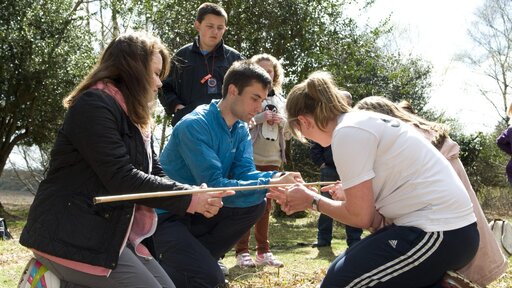
We offer a wide range of fun, engaging team development activities designed to build confidence, strengthen relationships and develop key life and work skills.
These sessions combine energetic, hands-on experiences with meaningful learning, with a strong emphasis on resilience, communication, problem solving, teamwork and creative thinking. Participants are encouraged to collaborate, set goals and overcome challenges in a supportive and interactive environment.
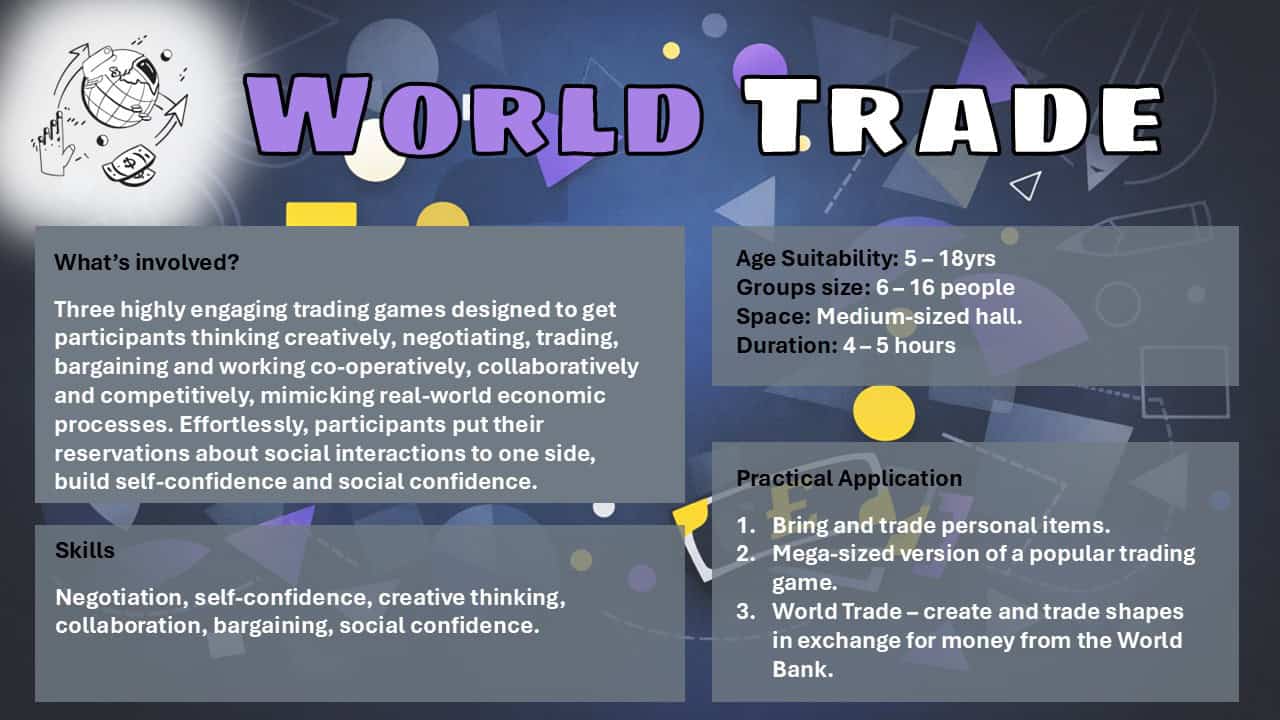
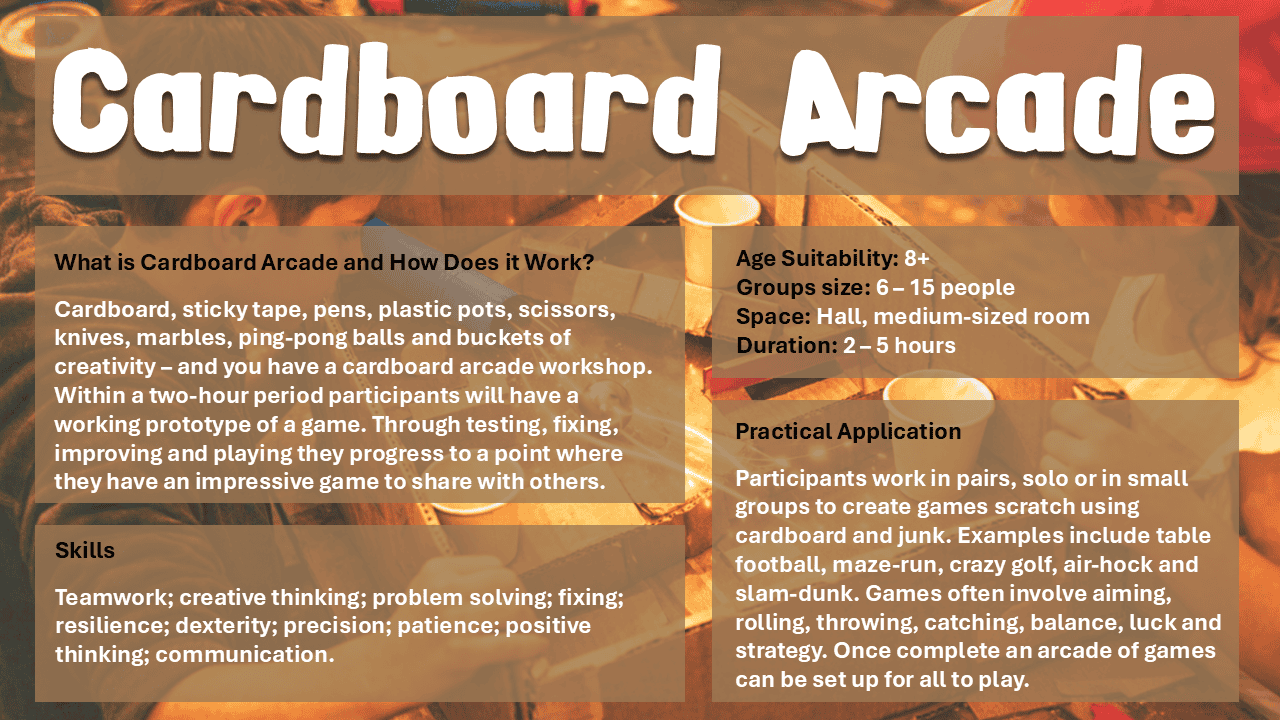
Activities such as Taskmasters, Orienteering Challenge, Safariand Capture the Flag place teams in dynamic, competitive situations where they must work together, think strategically and adapt under pressure. More creative sessions like Circus Skills, Cardboard Arcade and World Tradeoffer different approaches to teamwork, whether building games from recycled materials, exploring economic decision-making or developing coordination and confidence. Circus Skills workshops, in particular, focus on building self-confidence, resilience, motivation and hand-eye coordination, while also helping participants reflect on how they learn, their emotional responses, and the challenges and triggers they experience. Participants learn juggling with balls, scarves and clubs, poi, plate spinning, staff and flower sticks.
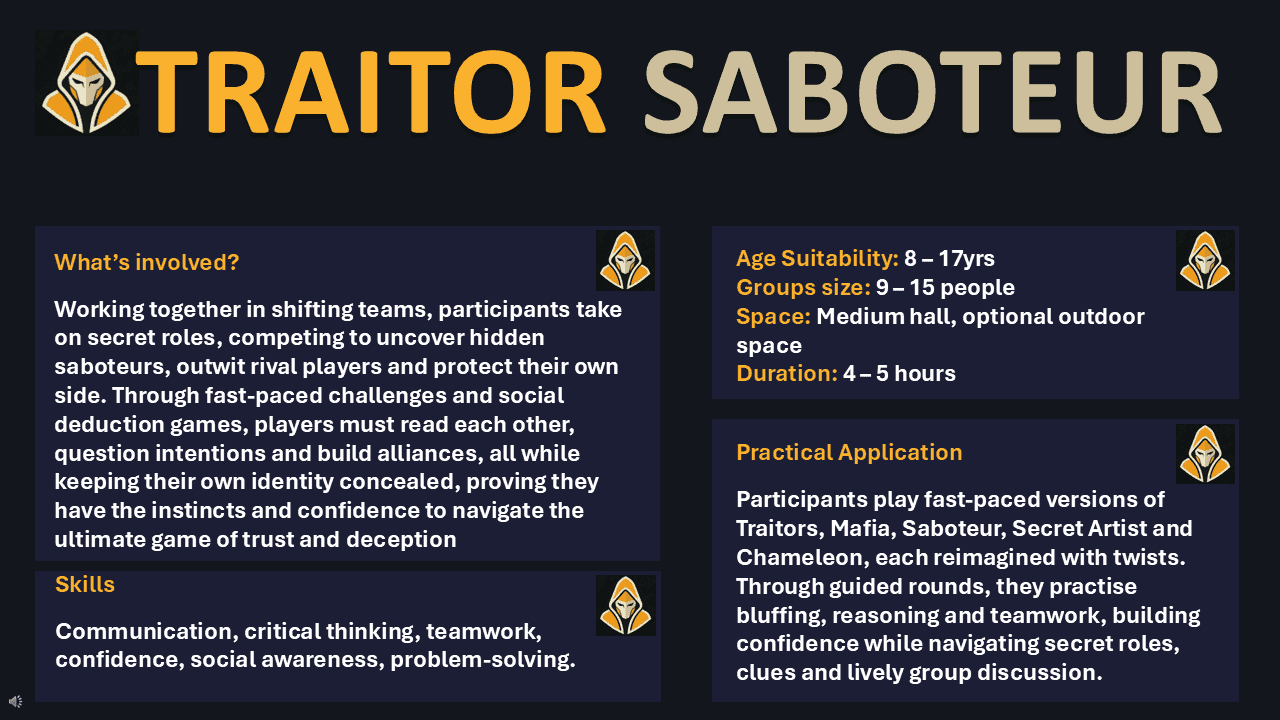
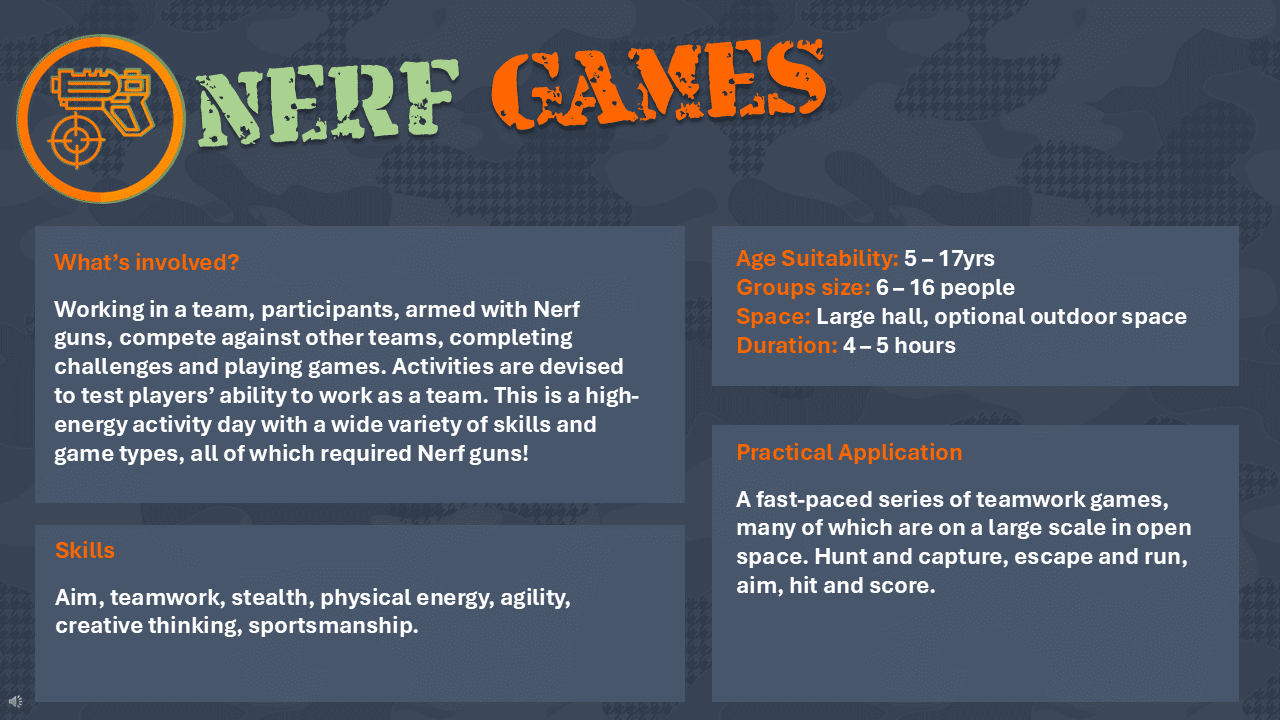
Thinking-led sessions such as Mind Gamesfocus on teamwork, intuition and quick decision-making, with teams tackling puzzles, guessing challenges and strategy-based tasks. Success depends on reading others, taking appropriate risks and tuning into how teammates think, while responding creatively in the moment. Nerf-based activities introduce a physical, tactical element, encouraging coordination, communication and teamwork in an engaging and accessible format.
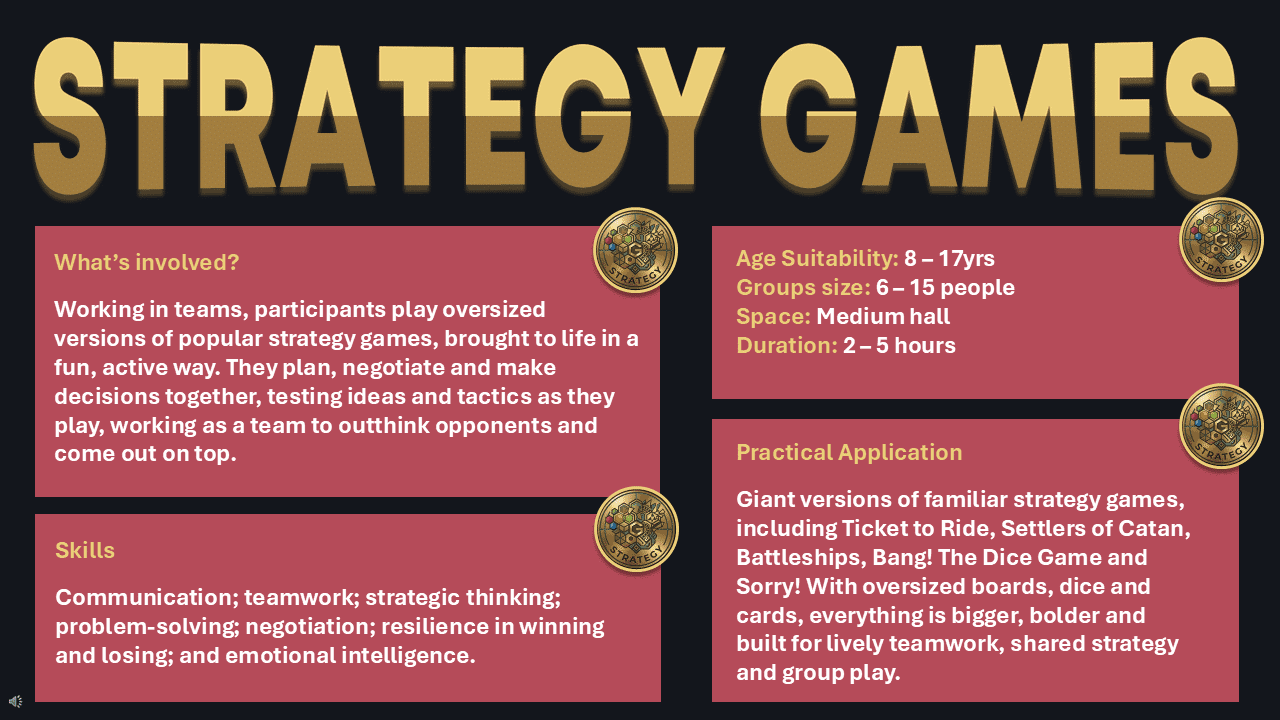
All activities can be tailored to suit different groups, environments and objectives. Groups can also select from a wider range of options, including super-sized strategy games that bring familiar formats to life on a larger scale, challenging teams to plan, negotiate and adapt as they work together to outthink their opponents.